
The Brisbane Knockdown Rebuild Process and Timeline
Plan the whole rebuild journey, from feasibility and finance to demolition, construction and moving home, with an illustrative timeline and delay checks.
A knockdown rebuild starts well before demolition. The practical order is feasibility, design and budget, finance and approvals, relocation and site clearance, construction, then handover. Your actual timing depends on the property, approval pathway and contract. Use an indicative programme to plan, not as a guaranteed moving date.
For a family balancing school, work and somewhere to live, the most useful question is not just “how long is the build?” It is “when do we need to leave, and what needs to be settled before we do?” Our knockdown rebuild Brisbane service can help you start that conversation.
Start with the land and the family's brief
Gather the address and lot details, any existing plans, a budget and the reasons your current home no longer works. Review planning controls, demolition feasibility, flood information, access and services. Early surveying, soil information and professional advice can reveal constraints that change the design or make renovation worth considering instead.
Do not use a floor plan's advertised width as the entire site assessment. Setbacks, neighbouring structures, orientation, drainage and construction access also affect the fit.
Resolve the design, scope and funding together
Choose a layout and inclusions that match your family and the assessed site. Ask what is included, what remains provisional and which specialists are responsible for demolition and engineering. Take the developing scope to your lender so the building contract, valuation, cash contribution and demolition arrangements can be considered together.
Approvals and finance may run alongside design work, but their dependencies matter. A planning issue can change drawings; changed drawings can affect engineering, price and lending. Keep a written list of what is approved and what is still an assumption.
An illustrative whole-project timeline
At first glance, this timeline may appear lengthy, however it is important to note that every knockdown rebuild project is unique. The timeframes shown below are illustrative only and have been included to demonstrate the typical stages involved in the process. Some projects may progress more quickly, while others can take longer depending on factors such as approvals, site conditions, design complexity, weather and client selections.
| Illustrative window | Work to plan | Decision before progressing |
|---|---|---|
| Months 1 to 4 | Feasibility, surveys, concept and budget | Is the site and proposed home workable? |
| Months 5 to 6 | Final documentation, approval and finance coordination | Are the required consents and funding ready? |
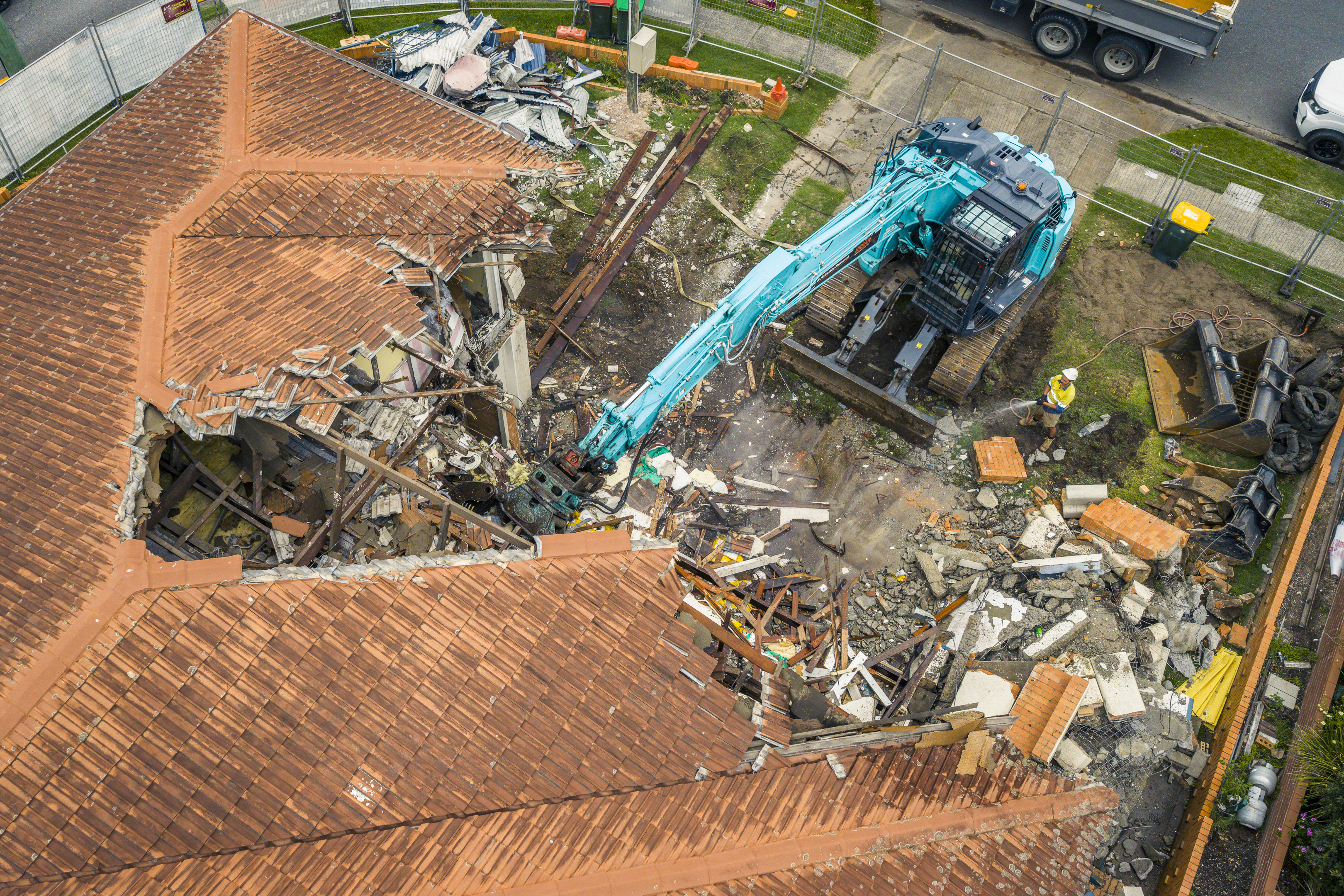
| Month 7 | Relocation, service arrangements, demolition and site readiness | Is the site cleared and accepted for construction? |
| Months 8 to 17 | Construction through the agreed contract stages | Have required work and inspections been completed? |
| Month 18 | Completion checks, handover arrangements and moving | Is the home ready for lawful occupation and handover? |
Move out only when the next stage is ready
Coordinate accommodation, contents storage, insurance, service disconnections and the demolition contractor's programme. Confirm lender consent before removing a mortgaged home. Asbestos assessment, required removal and clearance can affect when general demolition proceeds. The physical demolition is only part of the clearance period, not the whole pre-construction programme.
Construction and handover are separate milestones
Construction moves through the stages defined in your contract, with inspections and payment requirements along the way. Weather, material availability, access, unexpected ground conditions and variations can affect progress. Ask how changes and extensions of time are communicated and recorded.
Near completion, allow time for inspections, outstanding items, certification, lender requirements and the agreed final-payment and handover process. Do not cancel your rental on the strength of an informal forecast. Confirm the conditions for receiving keys and moving in.
Questions about timing
Can approvals and finance happen at the same time?
Some tasks can overlap, but lenders and approval bodies need particular documents. Ask your team to show the dependencies rather than adding separate estimates together.
What should our accommodation buffer cover?
Allow for more than the construction period: clearance, a delayed start, handover requirements and moving days also count. Get advice on a lease arrangement that can accommodate changes.
How do we keep the project moving?
Make selections on time, respond to information requests and avoid late design changes where possible. Ask for a written programme with decision dates and update it when assumptions change.
Sources and further reading
Sources checked on 20 October 2026. Requirements and products can change. Confirm the current position for your property and circumstances.