
Demolish, Subdivide or Build Two Homes in Brisbane?
Demolition, subdivision and dual occupancy are different decisions. Learn which feasibility questions to resolve before planning two Brisbane homes.
Demolishing one house does not give you permission to subdivide the block or build two homes. In Brisbane, demolition, reconfiguring a lot and dual occupancy are separate planning questions. Test the land, intended use and title arrangement together before commissioning two floor plans or assuming a sale will fund your family home.
If your main goal is simply a better home on your existing land, start with our knock down and rebuild builders. If you are exploring two homes, seek independent town-planning, surveying, legal and financial advice first. This guide does not confirm Ownit provides subdivision or dual-occupancy services.
Decide what outcome you actually want
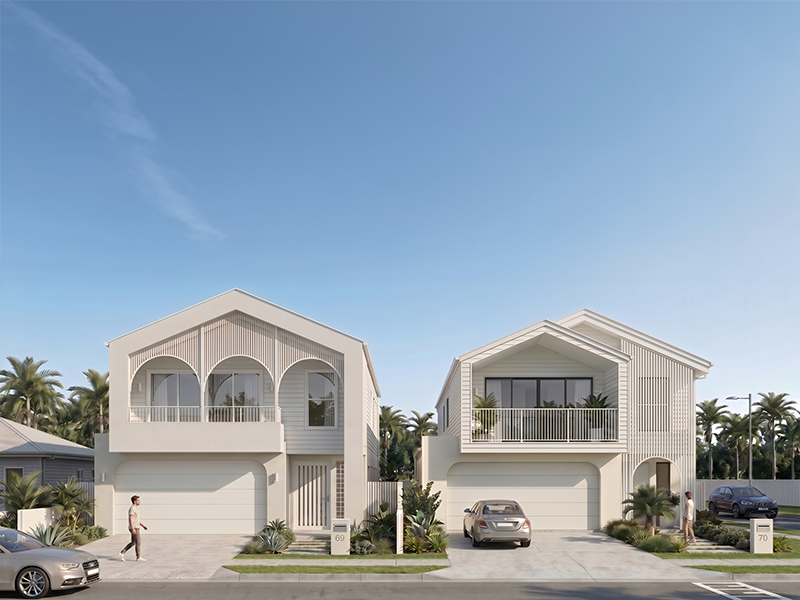
Subdividing land is also called reconfiguring a lot. It can create separate lots, but approvals and title registration involve more than drawing a line on a site plan. Brisbane City Council describes dual occupancy as two dwellings on one lot, attached or detached, or two dwellings on separate lots sharing common property.
Those descriptions do not make a duplex, two detached homes, a secondary dwelling and two separately titled houses interchangeable. Explain to your planner whether you intend to live in one, accommodate family, rent, sell or keep shared land. Ask your solicitor to explain ownership and title consequences rather than relying on a marketing label.
Why there is no single minimum block size
The relevant zone, precinct, neighbourhood plan, overlays and assessment criteria determine the requirements. Frontage, usable dimensions and access matter alongside area. A large block with a constrained building envelope can be less workable than its advertised square metres suggest. An existing pair of lot numbers also needs professional review; do not assume it establishes a ready-to-build title arrangement.
Character or heritage controls may require the existing home to remain. Flood, overland flow, significant vegetation, easements and infrastructure can reduce the usable area or change the layout. A neighbour's approval is useful background, not proof of your entitlement.
Commission feasibility in the right order
- Give a planner the lot details and a clear statement of the intended use and title outcome.
- Ask a surveyor to establish boundaries, levels, dimensions and relevant site features.
- Check character, flood, access, drainage and service constraints before settling on a layout.
- Identify the approval pathways for demolition, development, operational works and building work.
- Obtain a costed servicing and civil-works scope, then test the funding and ownership plan with your advisers.
The first useful deliverable is a written feasibility assessment identifying unresolved conditions and assumptions. It is not a promise that an application will be approved.
Look beyond the two building contracts
Your feasibility budget may need surveying, planning reports, application fees, infrastructure charges, service connections, access works, stormwater design, retaining, legal costs and title registration. Demolition and temporary accommodation may sit outside those figures. Confirm which charges apply and which costs are still allowances.
Ask a lender how it treats the proposal. A loan for one owner-occupied replacement house should not be assumed to cover a two-home development or a sale-dependent funding strategy. Tax and transaction consequences need advice for your circumstances; projected resale value is not cash available to pay today's invoices.
Approval is not the final subdivision milestone
Where a subdivision requires planning approval, conditions and associated works must be addressed. Council describes plan sealing as endorsement of a survey plan after relevant conditions and requirements are met. Title registration is another step. Your surveyor and solicitor should explain when each outcome is achieved and how it affects contracts.
Common feasibility questions
Can we demolish while feasibility is being checked?
Avoid irreversible work until the approval, lending and development strategy is confirmed. Clearing the site does not remove planning constraints.
Is a duplex the same as subdividing?
No. Dual occupancy concerns the residential use; subdivision concerns the land and title arrangement. Some projects involve both, each with its own requirements.
Who confirms the next step?
A qualified planner and surveyor can identify the site pathway. Ask the builder separately about its confirmed scope and design suitability, and your legal and finance advisers about ownership and funding.
Sources and further reading
Sources checked on 20 October 2026. Requirements and products can change. Confirm the current position for your property and circumstances.